
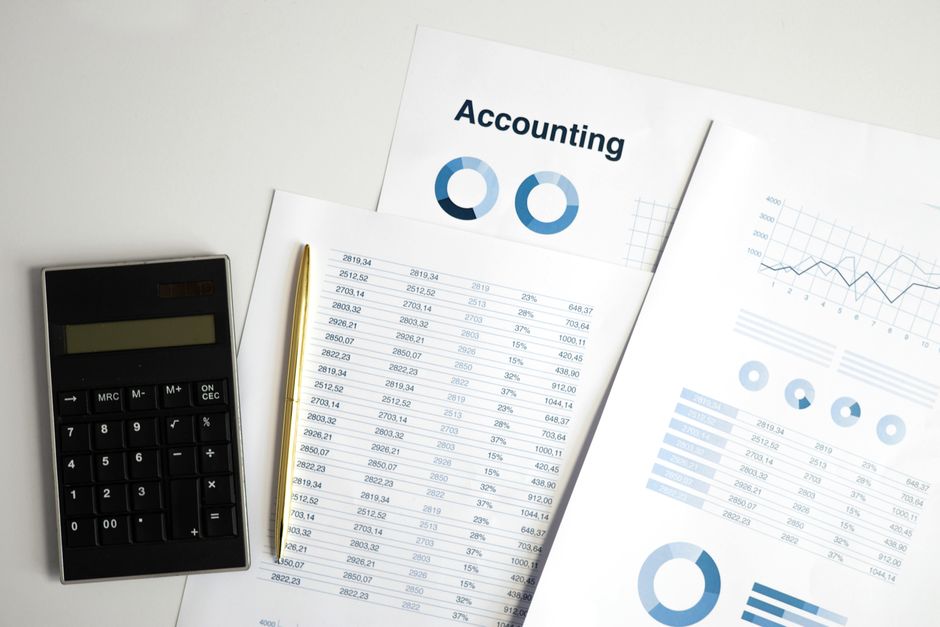
If you work in one of these fields, the weird part isn’t that AI exists. The weird part is how quickly it stopped being a demo and became part of the job. The AI impact on legal, marketing, and accounting roles is already here, and it doesn’t look the same in each profession. That matters, because a lot of people are still treating this like a future trend instead of a current pay-and-workload issue.
The old story was simple: learn a profession, get better at it for twenty years, and experience turns into safety. That story now has a hole in it. Not because experience stopped mattering, but because software started eating the repetitive layer of high-skill office work. Document review. First-draft copy. Routine reconciliations. The beige middle of the workday is getting automated.
That sounds alarming because it is alarming. But it isn’t random. Clio, Thomson Reuters, Marketing AI Institute, CPA.com, PwC, and the World Economic Forum all point to the same broad pattern: entry-level and routine tasks are under pressure, while judgment-heavy work is becoming more valuable. Think of it as the spreadsheet-eats-the-busywork phase. The title on the org chart may stay the same for a while. The substance of the job doesn’t.
The Numbers That Matter: How Widespread Is AI Adoption in These Three Fields?
This isn’t one of those cases where everyone is breathlessly predicting a thing that barely exists. The adoption numbers are already blunt.
Clio’s 2025 Legal Trends Report says 79% of legal professionals now use AI tools in their daily work. Thomson Reuters says AI adoption in accounting firms jumped from 9% to 41% in a single year. Marketing AI Institute’s 2024 State of Marketing AI Report found that 78% of marketers expect AI to automate at least a quarter of their tasks within three years.
Those numbers are useful because they cut through a lot of theater. Once a tool is used by four out of five professionals in a field, this is no longer about whether AI is “coming.” It’s already sitting in the workflow. The practical question becomes: which parts of the workflow did it take first?
The answer, across all three fields, is the same boring answer. AI grabs the repeatable, text-heavy, pattern-matching work before it touches the parts that require judgment, trust, or political awareness. That’s why the people most at risk are often not the most senior experts. They are the workers whose job used to be proving themselves by doing large volumes of structured work correctly and quickly.
Legal: Document Review Isn’t Dead, But It’s Different
Legal work isn’t disappearing. The business model around lower-level legal work is getting shoved around.
Clio reported that 48% of lawyers now use AI-powered legal research daily, and 65% of legal professionals using AI say it improves work quality. The same 2025 Clio report found that growing law firms nearly doubled revenue while increasing clients by only 50%. That’s the kind of ratio that makes partners very interested in software and junior associates slightly less relaxed.
Goldman Sachs estimated in 2023 that 44% of legal tasks could be automated by AI. Notice the word tasks, not jobs. That distinction matters. Clients still want a human being signing off on strategy, risk, negotiation posture, and anything that could become a liability later. Nobody wants to explain to a board or a judge that the chatbot seemed confident.
What changes first is the ladder. Document review, first-pass research, contract comparison, and standard drafting move faster with AI, which means firms can squeeze more output from fewer junior hours. That puts pressure on the old apprenticeship model where a lot of early-career training happened inside routine work. So legal isn’t becoming obsolete. It’s becoming less forgiving if your value starts and ends with the first draft.
For experienced legal professionals, this cuts both ways. The administrative drag goes down. The expectation for strategic judgment goes up. That’s usually a good trade if your real value is pattern recognition and client trust. It’s a rougher deal if your role depended on billing for the legal equivalent of sorting socks.
Marketing: The Shift From Creating to Orchestrating
Marketing may be the least sentimental of the three. Once software can generate decent copy, summarize customer segments, suggest campaign variations, and spin up creative assets fast enough, management starts asking an ugly question: why does this department still need so many hands?
IDC predicts that by 2028, three out of five marketing functions will be handled by AI workers. Marketing AI Institute found that 47% of marketers expect AI to eliminate more jobs than it creates within three years, even while 69% say they feel excited about its potential. That mix of fear and enthusiasm isn’t contradictory. It’s realism with a decent LinkedIn face.
The pay data is even more revealing. PwC’s 2025 Global AI Jobs Barometer found that workers with AI skills command a wage premium, and the cited figure for AI-skilled marketers is 43%. In other words, marketing is splitting into two classes: people using AI to direct more output, and people whose output is becoming cheaper because AI can imitate enough of it.
That’s why the job is shifting from creating to orchestrating. The premium increasingly sits with the marketer who can frame a campaign, pressure-test a message, combine automation with actual customer insight, and decide what shouldn’t be published. The lower-value layer is “make five headline variants.” AI is already happy to do that at 2:14 a.m. without asking for budget approval.
The villain here isn’t the technology. It’s the belief that more content automatically means more marketing. A lot of teams are about to learn that flooding the internet with synthetic oatmeal doesn’t count as strategy.
Accounting: The Boring Stuff Gets Automated, the Judgment Stays
Accounting is the clearest example of what useful AI adoption looks like when nobody is pretending a model should run the whole department alone.
The World Economic Forum’s Future of Jobs Report 2025 lists accounting and bookkeeping clerks among the fastest-declining jobs. Stanford Graduate School of Business, summarizing research by Choi and Xie in 2025, found that accountants using AI closed the books 7.5 days faster and spent 8.5% less time on routine processing. CPA.com’s 2025 AI in Accounting Report says 81% of accountants report direct productivity improvements from AI.
That tells a pretty consistent story. Reconciliation, classification, anomaly spotting, data cleanup, and first-pass reporting get faster. What remains valuable is judgment: deciding whether the numbers make sense, whether a control issue matters, whether a pattern is fraud, error, or timing, and how to explain any of it to leadership without sounding like a robot that learned GAAP from a blender.
This is why accounting probably has the cleanest augmentation story of the three. Marketing has more replacement anxiety because so much of its output is digital and iterative. Legal has more structural tension because junior labor has historically been part of the economics. Accounting, by contrast, has a lot of work that nobody romanticizes and everybody wants done accurately. If AI helps clear that out, experienced professionals get more time for review, judgment, and advisory work.
That doesn’t mean no one loses. It means the loss is concentrated in the repetitive layer. The safer position is being the person who interprets the exception, not the person who only enters the transaction.
AI Impact on Legal, Marketing, and Accounting Roles: What They Share and Where They Split
The common pattern is easy to miss because the surface details are different. Legal sounds cautious. Marketing sounds anxious. Accounting sounds relieved. Underneath that, the mechanics are similar.
In all three fields, larger organizations tend to adopt AI faster because they have more budget, more pressure to standardize work, and more incentive to squeeze extra output from existing staff. In all three, the routine layer of professional work is where the first wave lands. And in all three, experienced workers report some upside: Clio says 65% of legal professionals using AI report better work quality, Marketing AI Institute says 69% of marketers feel excited about AI’s potential, and CPA.com says 81% of accountants report productivity gains.
But the differences matter. Legal treats AI like a productivity partner with a liability leash attached. Marketing treats it like both an amplifier and a replacement threat. Accounting treats it like a machine for deleting drudgery so humans can focus on oversight.
That’s the bigger reframe: AI isn’t replacing professions in one dramatic sweep. It’s repricing the layers inside each profession. Some tasks become cheaper. Some judgment becomes more valuable. Some roles get awkward because they were built around doing the now-cheap layer for a salary that assumed scarcity.
What This Means for Your Career If You Work In or Near These Fields
The useful takeaway isn’t “panic.” It’s “stop assuming your job title explains your future.”
PwC’s 2025 Global AI Jobs Barometer found a 56% average wage premium for AI-skilled workers across industries. CPA.com says 46% of U.S. accounting professionals now use AI daily and 98% report improved accuracy. Clio says 65% of legal professionals using AI save one to five hours per week. Those aren’t abstract innovation metrics. They are compensation and bargaining-power signals.
If AI can remove a chunk of your routine work, one of two things usually happens. Either you become more valuable because you can handle more judgment-heavy output with the same hours, or your employer decides that your role now contains too much automatable work to justify the old headcount. That’s the whole fork in the road.
So the right career question isn’t “Will AI take my profession?” It’s “Which part of my work becomes cheaper when software gets better, and which part becomes more valuable because software still needs supervision?” If you can’t answer that, you are managing your income with the professional equivalent of cruise control in a construction zone.
The adaptation path isn’t glamorous. Learn the tools enough to use them well. Get better at checking their work. Move closer to client trust, decision-making, exception handling, and synthesis. Build what might be called an unskippable layer of value, the part nobody wants to hand to software without a human name attached to the consequences.
That’s also why mid-career workers should ignore a lot of the reskilling industrial complex. You probably don’t need to become an AI engineer. You need to become harder to route around. Very different project. Much better odds.
Frequently Asked Questions
Is AI going to replace lawyers, marketers, and accountants entirely, or just change their jobs?
The evidence in the cited reports points much more strongly to job change than total profession replacement. Goldman Sachs estimated 44% of legal tasks could be automated, not 44% of lawyers. In accounting, Stanford GSB and CPA.com point to faster closes and productivity gains, which is different from wiping out the profession. Marketing has the highest replacement anxiety, but even there the premium is shifting toward people who can direct, edit, and evaluate AI-assisted work.
Which specific job titles within legal, marketing, and accounting are most at risk from AI?
The most exposed roles are usually the ones built around structured, repeatable work: junior legal research and document review, content-production-heavy marketing roles, and bookkeeping or routine accounting support work. The pattern across the reports is that entry-level and repetitive functions get restructured first.
What skills should someone in these fields learn to stay relevant as AI adoption accelerates?
Start with tool fluency, but don’t stop there. The durable skills are judgment, review, decision-making, client communication, exception handling, and the ability to tell when the machine is confidently wrong. Anyone can paste a prompt into a box. The scarce skill is knowing whether the answer deserves to survive contact with reality.
Are salaries in legal, marketing, and accounting going up or down because of AI?
Both pressures are happening at once. PwC found a broad wage premium for AI-skilled workers, and the cited figure for AI-skilled marketers is 43%. At the same time, tasks that become easier to automate often lose pricing power. So people who learn to use AI well may gain room to negotiate, while roles heavy on routine production can see wage pressure.
How do I know if AI is making my work better or just slowly replacing parts of my role?
Look at where the saved time goes. If AI removes routine work and you are being trusted with more judgment, more client-facing responsibility, or better-compensated output, that is augmentation. If AI removes routine work and the organization mainly responds by shrinking headcount or flattening the job into oversight of cheaper output, replacement pressure is already in the room.
If you’re looking for a cleaner picture of your credit before rethinking your finances, Credit Karma gives you free access to your score and alerts without selling you anything you didn’t ask for.
The Bottom Line
AI isn’t hitting legal, marketing, and accounting roles the same way, but it is following the same economic script: routine work gets cheaper, judgment gets more valuable, and anyone still selling only the first layer of output is in a worse position than they were two years ago. The safer move isn’t to outrun the software. It’s to move toward the part of the job where a human still owns the risk.
This article contains affiliate links. We may earn a commission if you sign up through these links, at no additional cost to you.
Sources
- Clio. “Legal Trends Report 2025”
- Thomson Reuters. “How Will AI Affect Accounting Jobs?”
- Marketing AI Institute and Drift. “2024 State of Marketing AI Report”
- Goldman Sachs. “Generative AI Could Automate 44% of Legal Tasks”
- Forbes. “AI Is Killing Marketing As We Know It — So What Comes Next?”
- IDC. “FutureScape: Worldwide CMO 2025 Predictions”
- Stanford Graduate School of Business. “AI Is Reshaping Accounting Jobs by Doing the Boring Stuff”
- World Economic Forum. “Future of Jobs Report 2025”
- CPA.com. “2025 AI in Accounting Report”
- PwC. “Global AI Jobs Barometer 2025”
Continue reading: Read the pillar — Your Income in the AI Era
This article is for informational purposes only and is not financial advice. Consult a qualified professional for personalized guidance.
Leave a Reply