
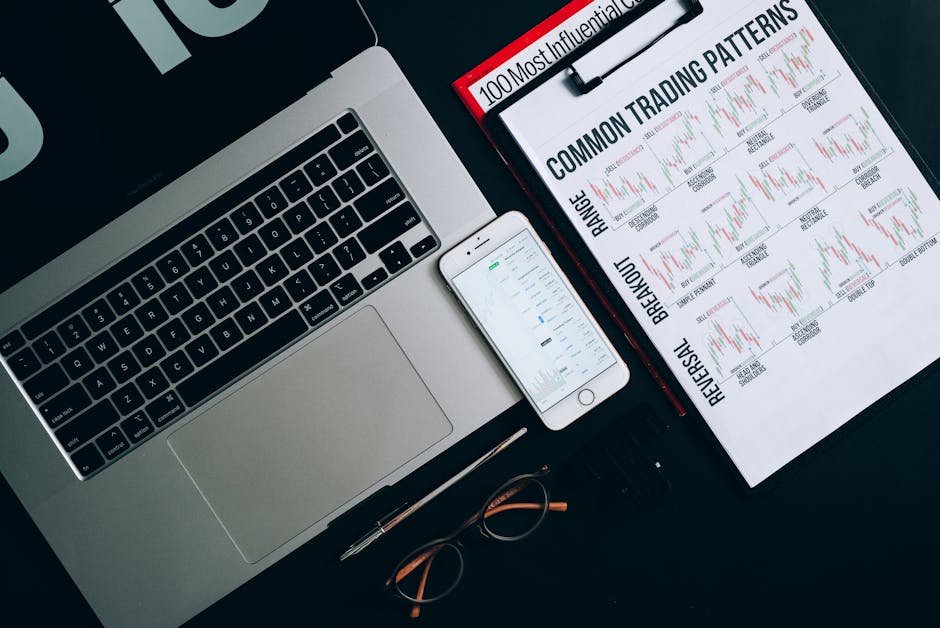
If you’re 52, have a 401(k), and haven’t looked closely at what’s inside it lately, there’s a decent chance you own more AI risk than you think. Not because you made some wild bet on robot overlords. Because broad-market funds kept doing what broad-market funds do, and the biggest winners kept becoming a larger share of the whole pile.
That’s the problem with market concentration. It hides inside things that look sensible. A total market fund. A couple of ETFs. Maybe an old rollover IRA you haven’t touched since the second Bush administration. It all feels diversified until you realize the same handful of AI-exposed tech companies are doing most of the heavy lifting.
An AI-resistant portfolio is not a bunker. It’s not a prediction that tech will crash tomorrow. It’s a practical way to reduce the risk that one crowded trade, one overheated sector, or one very modern form of groupthink does a number on money you need to last for the next 20 or 30 years. Morningstar‘s research tools are useful here because they show what you actually own, how exposed you really are, and which companies or funds have a better shot at holding up when the AI noise gets loud.
The Hidden Concentration Risk AI Has Created in Your Portfolio
The AI rally has made a lot of portfolios look smarter than they really are. When a small group of giant companies drives a big chunk of market returns, broad diversification starts wearing a job-security costume.
Morningstar reported that the top 10 stocks in the S&P 500 made up more than 35% of the index by early 2025, the highest concentration since the 1960s. Those top slots were dominated by AI-exposed tech names. Morningstar also found that just five tech stocks — Microsoft, Meta, Nvidia, Tesla, and Oracle — accounted for 40% of the S&P 500’s 5% drop between Oct. 28 and Nov. 20, 2025. That’s the part worth paying attention to. If a few names can do that much damage on the way down, they were doing an awful lot of lifting on the way up.
Sharesight adds a second warning sign: investors often stack funds that own many of the same stocks, which creates overlap that looks diversified on paper and isn’t. And Morningstar cited research showing that stocks in the top 20% of five-year performers went on to lag the market 86% of the time over the next decade. Translation: yesterday’s winners are often tomorrow’s disappointment. Wall Street keeps relearning this like it just found a new species.
For a self-directed investor nearing retirement, that’s not an abstract problem. If your index funds, growth funds, and sector funds all lean on the same AI-heavy names, you may be taking one concentrated bet with three different labels on it. That’s exactly the sort of hidden exposure that can throw off retirement timing, income plans, and your ability to stay calm when markets get ugly.
What AI Resistance Actually Means for Your Investment Strategy
AI resistance does not mean avoiding every company that uses AI. Good luck with that. It means building a portfolio around businesses and funds that can stay durable even as AI changes costs, margins, workflows, and competitive pressure.
McKinsey estimates that AI, generative AI, and agentic AI could reduce asset manager cost bases by 25% to 40%. That’s not a minor software upgrade. That’s a structural change in how an industry works. BlackRock makes a related point from the market side: HALO sectors — Heavy Assets, Low Obsolescence sectors like energy, utilities, industrials, and materials — were just 17% of the S&P 500 at the end of February 2026, while tech and communication services sat near a 10-year high.
That gap matters because low-obsolescence businesses often depend less on the latest software fashion cycle and more on real-world assets, regulated demand, physical infrastructure, or industry positions that are hard to dislodge. They’re not invincible. Nothing is. But they are usually less exposed to the “one model update just changed everything” problem.
For an individual investor, an AI-resistant portfolio is really about durable competitive advantage. That’s why Morningstar’s framework matters. Instead of chasing whichever ticker got mentioned most often on finance Twitter this week, you look for companies with reasons to keep earning strong returns even after AI becomes normal. Durable wins beat exciting wins when you’re investing for the back half of life.
Using Morningstar Portfolio X-Ray to Identify Hidden AI Overexposure
Portfolio X-Ray is the blunt instrument most people need first. Before you start fixing a portfolio, you need to know what it actually contains.
Morningstar’s X-Ray tool breaks a portfolio into its underlying asset allocation, investment style, geographic exposure, sectors, and top holdings across all your funds at once. That matters because hidden overlap is where false diversification lives. One ETF may look conservative. Another may look balanced. Add a third and you feel wonderfully prudent. Then X-Ray shows Apple, Microsoft, and Nvidia sitting in all three like uninvited relatives who somehow have keys to the house.
That’s how investors can drift into 45% or more total technology exposure without meaning to. Standard account views usually show fund names and percentage allocations. They do not always show how often the same underlying companies are repeated across the portfolio. X-Ray does.
That gives you a better question than “Am I diversified?” The better question is: “If AI enthusiasm unwinds hard, how much of my portfolio gets hit at the same time?”
This is also where How to Evaluate Your Retirement Portfolio Without Paying a Financial Advisor becomes useful alongside Morningstar. The whole point is to stop guessing. When your risk is visible, you can decide whether it still fits your timeline, your stomach, and your retirement math.
Morningstar Economic Moat Ratings: Finding Companies Built to Last Through AI Disruption
Once you’ve identified concentration risk, the next step is deciding what deserves a place in the portfolio instead. Morningstar’s Economic Moat Rating is one of the cleaner frameworks for that job.
Morningstar evaluates companies on five sources of durable competitive advantage: intangible assets, switching costs, network effects, cost advantages, and efficient scale. Companies rated Wide Moat are expected to hold their advantage for more than 20 years. Narrow Moat companies are expected to defend it for at least 10 years. Only about 10% of stocks in Morningstar’s coverage universe earn a Wide Moat rating.
That selectivity is the point. A moat rating is not telling you which stock is fashionable. It is asking whether a business has a reason to keep winning after the hype cycle moves on.
Think about what AI is likely to do across industries: compress routine work, lower some barriers to entry, and make it cheaper for competitors to imitate each other. In that environment, the companies most likely to hold up are the ones with advantages that don’t vanish because software got cheaper. Strong brands. Embedded customer relationships. Real switching costs. Network effects that new entrants can’t casually copy. Market structures where scale itself keeps competition limited.
For readers trying to build Your Income in the AI Era, this is a useful reframe: you’re not buying “AI-resistant” as a theme. You’re buying durability. The label matters less than the defense.
Navigating Fund Selection with Morningstar Medalist Ratings
Not everyone wants to build a portfolio stock by stock. Fair enough. Most people have better things to do than pretend they are running a small hedge fund from the dining room table.

Morningstar Investor
This article contains affiliate links. We may earn a commission at no extra cost to you.
Morningstar’s Medalist Rating is built for fund selection. It’s a forward-looking, analyst-driven rating system that evaluates funds on four pillars: People, Process, Parent, and Price. Funds earn Gold, Silver, Bronze, Neutral, or Negative ratings. Gold, Silver, and Bronze indicate Morningstar expects the fund to produce positive alpha over the long term.
That matters more in an AI-heavy market because simple index exposure can keep pulling you back toward the same concentrated winners. A strong actively managed fund, at least in theory, has the ability to make judgment calls that a plain index fund will not. It can size exposures differently, avoid obvious crowding, or lean toward sectors and businesses with more durable economics.
This also answers the practical question of what tool to lean on. For building an AI-resistant portfolio, the Medalist framework is the more relevant Morningstar rating because it is explicitly forward-looking and grounded in how the fund is run, who runs it, what it costs, and whether the parent organization deserves trust.
If you’re comparing research platforms, Best Investment Research Tools for Self-Directed Retirement Planning pairs nicely with this step. You don’t need ten dashboards. You need one process that helps you avoid dumb concentration and select funds with some discipline behind them.
Building and Rebalancing Your AI-Resistant Portfolio with Morningstar Tools
This is where the tools become a process instead of a pile of features.
Morningstar says rebalancing is the single most important action for keeping portfolio risk in check, especially after a strong equity rally leaves investors heavy on stocks and light on bonds. That’s exactly how unintended AI exposure grows. Winners get larger. Tech gets heavier. What started as a reasonable allocation becomes a lopsided bet because nobody took ten minutes to look under the hood.
A simple workflow helps:
Start with Portfolio X-Ray to see your true sector exposure, top holdings, and fund overlap. Use Economic Moat data when you’re evaluating individual stocks or deciding which kinds of businesses deserve room in the portfolio. Use Medalist Ratings when you’re selecting funds and want a forward-looking screen for quality and process. Then rebalance when the portfolio drifts too far from the mix you actually meant to hold.
Morningstar Investor costs $249 per year and bundles the core pieces: Portfolio X-Ray, Medalist Ratings, Economic Moat data, stock screeners, fair value estimates, and portfolio monitoring tools. For a self-directed investor, that’s the appeal. You can build a repeatable system without paying an advisor to do basic visibility work you can handle yourself.
The goal here is not perfection. It’s control. You want to know whether 30 years of savings are quietly turning into one oversized bet on a handful of companies whose valuations already assume the future goes exactly right. That’s not investing. That’s hope wearing spreadsheets.
Frequently Asked Questions
How much does a Morningstar Investor subscription cost, and can I get started with a free trial?
Morningstar Investor is priced at $249 per year. That subscription includes Portfolio X-Ray, Medalist Ratings, Economic Moat data, fair value estimates, and portfolio monitoring tools. If you’re looking for a free trial, check Morningstar’s current offer directly before signing up, since trial terms can change.
Can I really build an AI-resistant portfolio on my own using Morningstar tools, or do I need a financial advisor?
You can do the core work yourself if you’re willing to review your holdings, understand overlap, and rebalance with some discipline. That’s the practical case for Morningstar Investor: it gives self-directed investors the visibility and research tools needed to monitor concentration risk without automatically hiring an advisor.
What’s the difference between Morningstar’s Star Rating and the Medalist Rating, and which should I use?
For this specific job, use the Medalist Rating. It’s the forward-looking, analyst-driven framework described here, built around People, Process, Parent, and Price. If your concern is whether a fund is positioned to navigate AI-driven market shifts rather than simply ride a crowded index, Medalist is the more relevant tool.
How often should I run a Portfolio X-Ray analysis to catch AI-related concentration risk before it gets dangerous?
Run it whenever you make meaningful allocation changes, and run it again after strong market moves that could have made your winners much larger. The danger is drift. Hidden overlap usually builds slowly, then becomes obvious all at once.
If my Portfolio X-Ray shows I’m heavily concentrated in tech stocks because of hidden fund overlap, what do I do next?
First, figure out whether the concentration came from duplicated holdings across multiple funds or from one oversized allocation. Then decide what mix you actually want. From there, you can reduce overlapping positions, add exposure to less crowded sectors, and use rebalancing to bring the portfolio back in line with your intended risk.
As you build an AI-resistant portfolio with these research tools, don’t overlook your financial foundation. Checking your credit health is a simple first step toward understanding your full financial picture before making bigger moves. Credit Karma gives you free access to your credit score and alerts without selling you anything you didn’t ask for.
The bottom line
Morningstar AI-resistant portfolios are really about clarity, not prediction. If you can see your hidden concentration, favor durable businesses and disciplined funds, and rebalance before drift turns into risk, you give your retirement money a better chance of holding up when the AI trade stops looking invincible.
This article contains affiliate links. We may earn a commission if you sign up through these links, at no additional cost to you.
Sources
- Worried About an AI Crash? Here’s How to Diversify Your Portfolio — Morningstar (2025)
- Top 5 Portfolio Moves for 2025 — Morningstar (2025)
- Adding AI Resilience to Equity Portfolios — BlackRock (2026)
- Morningstar Portfolio X-Ray Help Center — Morningstar (2025)
- How to Measure a Company’s Competitive Advantage (Economic Moat Rating) — Morningstar (2025)
- What’s Changing (and Not Changing) with the Morningstar Medalist Rating — Morningstar (2024)
- Morningstar Investor: Portfolio Management Tools — Morningstar (2025)
- ETF Overlap: How to Check for Hidden Concentration — Sharesight (2024)
- The State of AI 2025: Insights from McKinsey — McKinsey & Company (2025)
Continue reading: Read the pillar — Your Income in the AI Era
This article is for informational purposes only and is not financial advice. Consult a qualified professional for personalized guidance.
Leave a Reply